
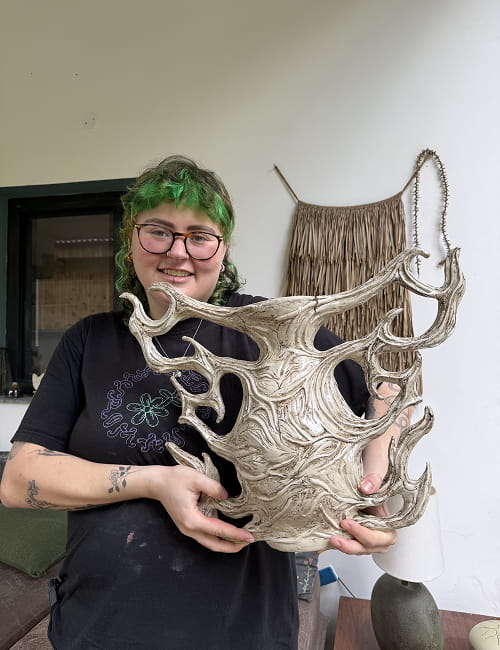
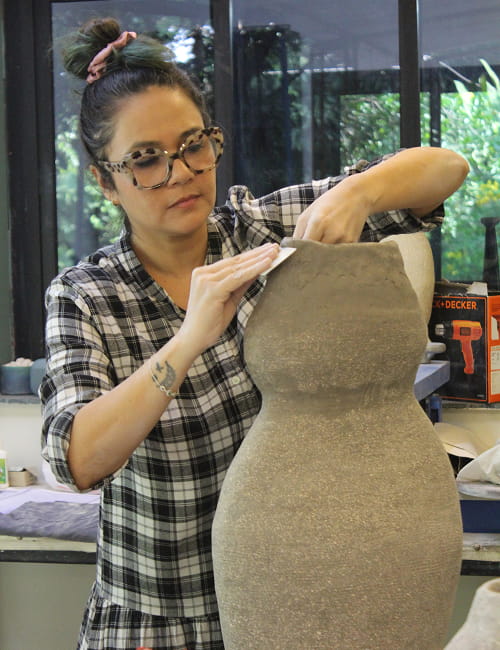
You'd like to become a serious, selling ceramic artist
You want to open your own pottery studio
You'd like to become a pottery teacher or instructor
You'd like to combine pottery with an existing practice — modalities, cognitive behavioural work
You've worked in a creative field before — design, art, craft, or otherwise
Foundations
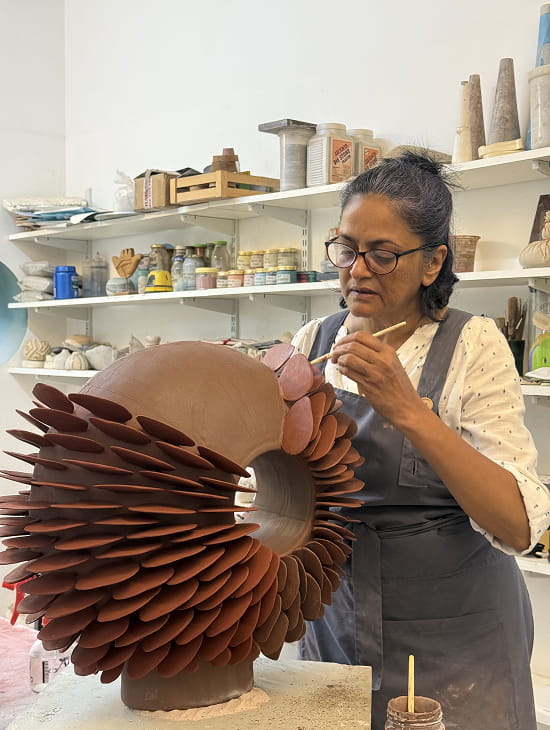
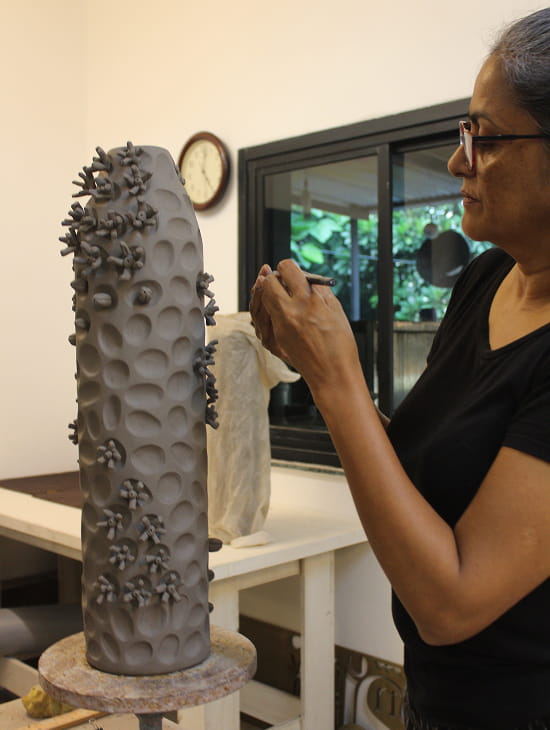
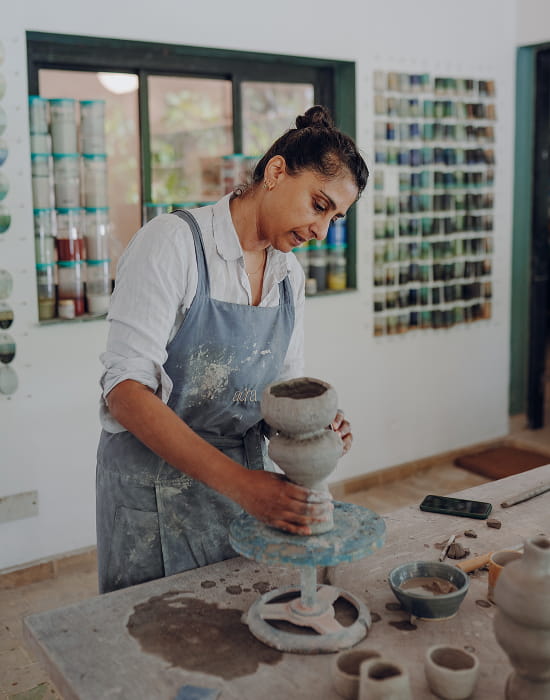
You begin with stoneware clay and the core techniques every potter needs. Wedging, pinching, coiling, slab building, scoring, slipping, and joinery. By the end of this module, you are building with confidence and understanding why each step matters. Wheel throwing is introduced here as a parallel practice. While you may know all of this already, we go over the basics again to build a strong foundation, Andy style.
Surface and Decoration
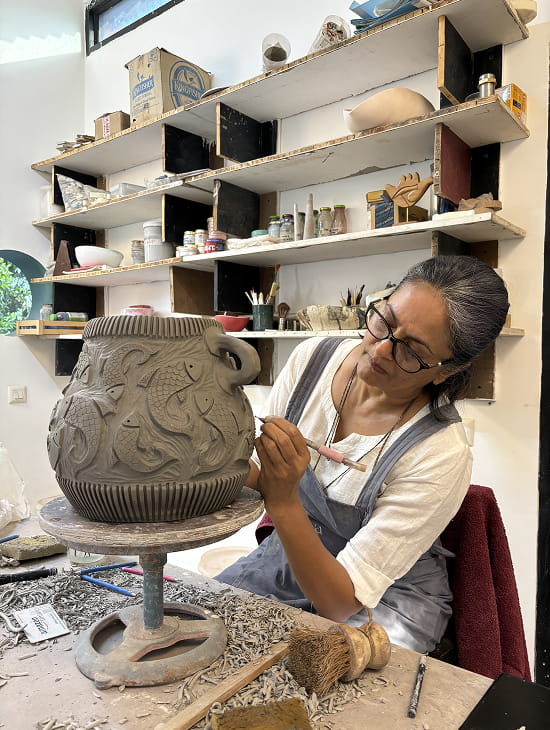
The focus shifts to what happens on the surface of a piece. You will work with sgraffito, carving tools, coloured slips and oxide washes. This module develops your eye as much as your hand. Practice and refining your skill and approach is key.
Materials and Firing
You will build with molds, work with groggy clay and explore sand slips as a surface material. You will complete your first bisque and glaze firings here, learning how clay and glaze behave in the kiln.
Form and Design
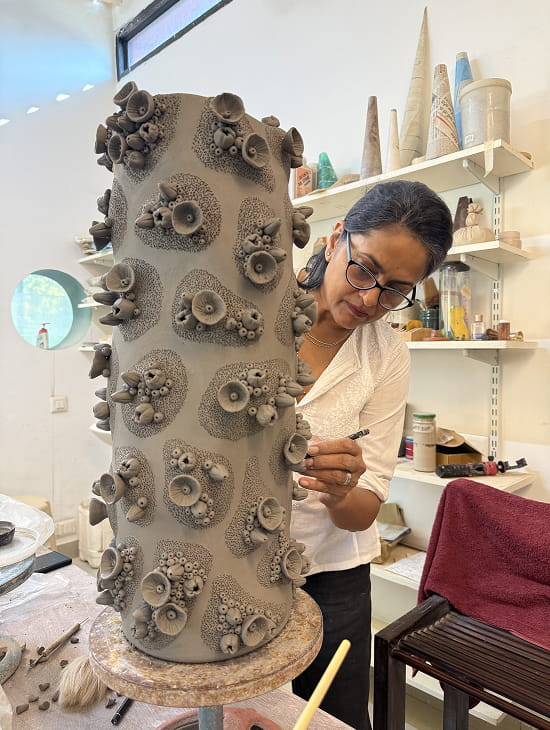
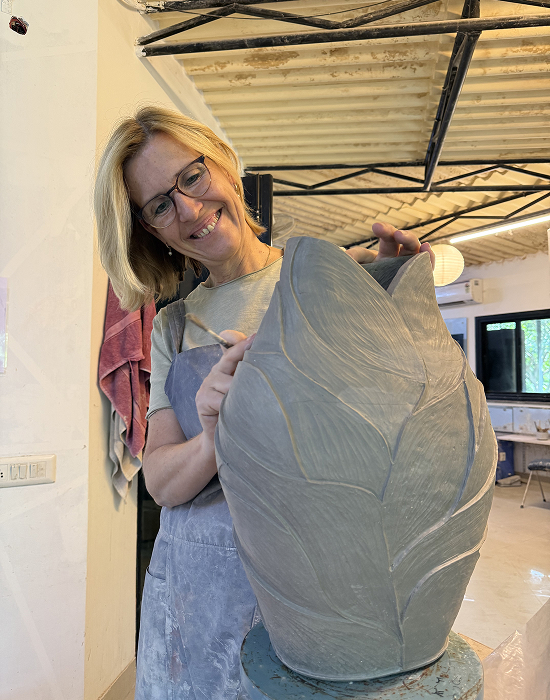
This is where technical skill meets creative thinking. With Andy's guidance, you'll sketch and ideate forms, work through design templates, and begin combining techniques to build more complex pieces. Through this hands-on feedback, you'll start to develop a visual language that's distinctly your own.
Advanced Making
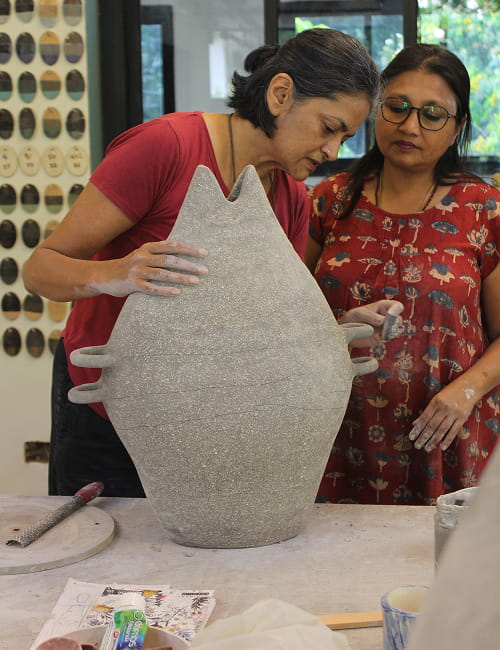
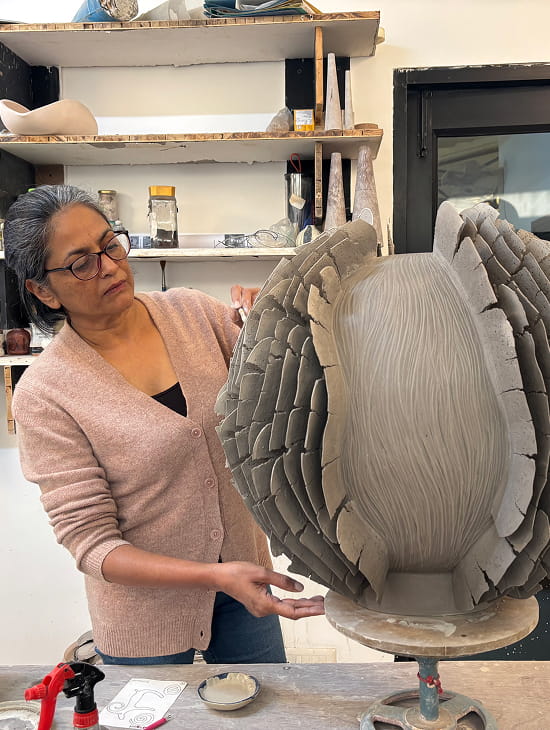
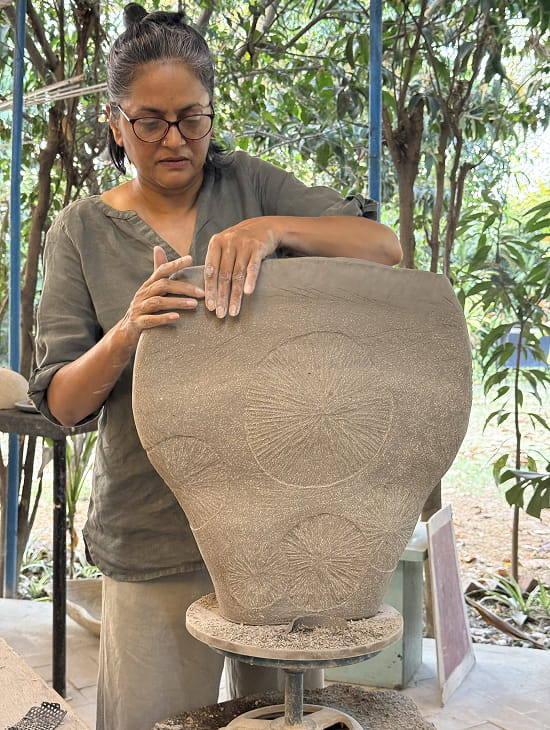
You will alter and combine forms and learn to build large, working up to 24-inch pieces. Building larger complex pieces comes with understanding joinery and thinking outside the box with your forms and designs. Think sculptural pieces, artworks, and more.
Glaze Chemistry and Kiln Management
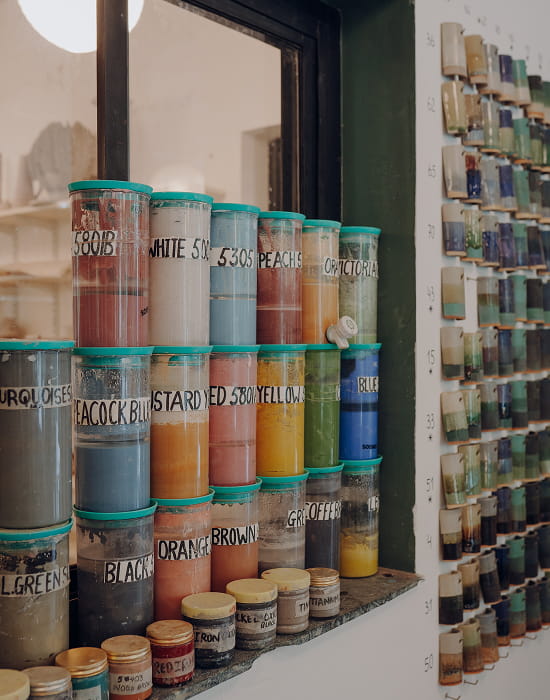
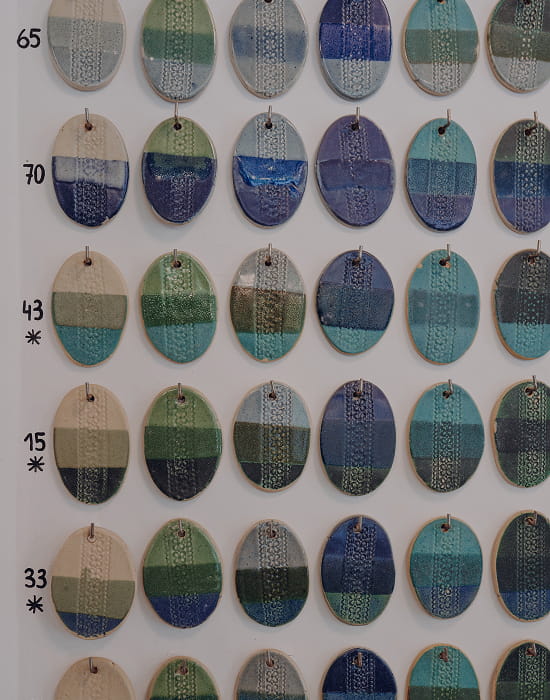
The final module covers glaze chemistry from the ground up — you'll learn to formulate and mix your own glazes, then apply them by dipping, brushing, and spraying. You will fire a gas kiln and manage a firing chart from start to finish. By the time you leave, you understand the complete ceramic cycle.
9:30 AM
A slow breakfast
Start unhurried, with farm-fresh food and no reason to rush.
11:00 AM
Studio time
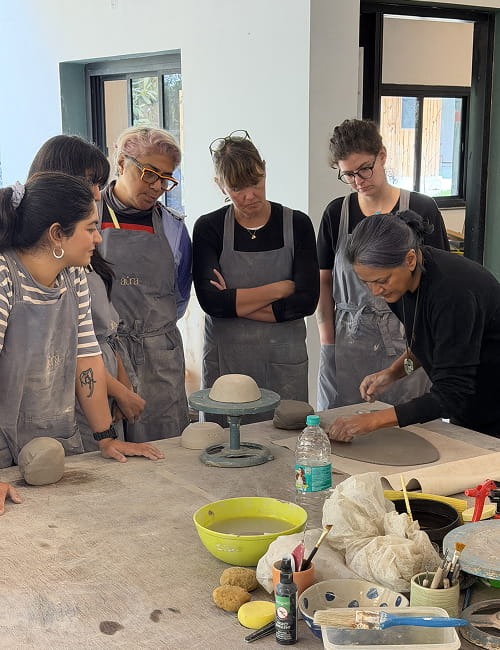
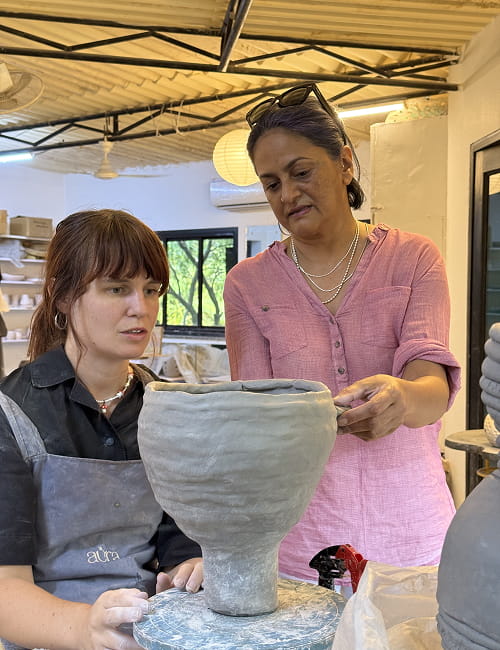
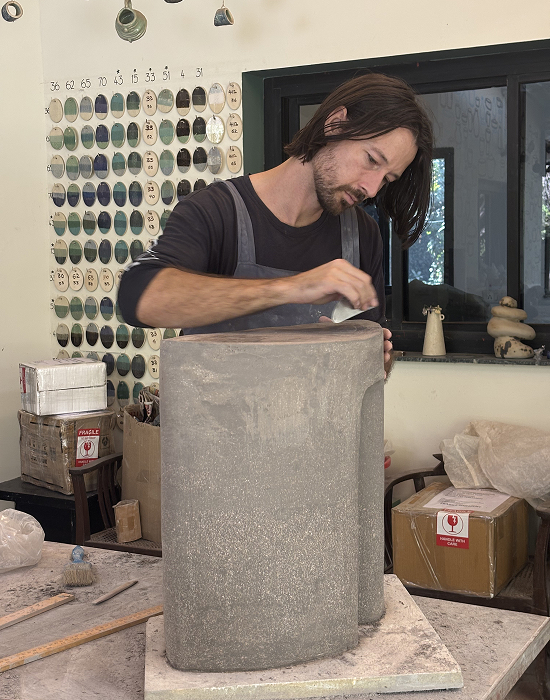
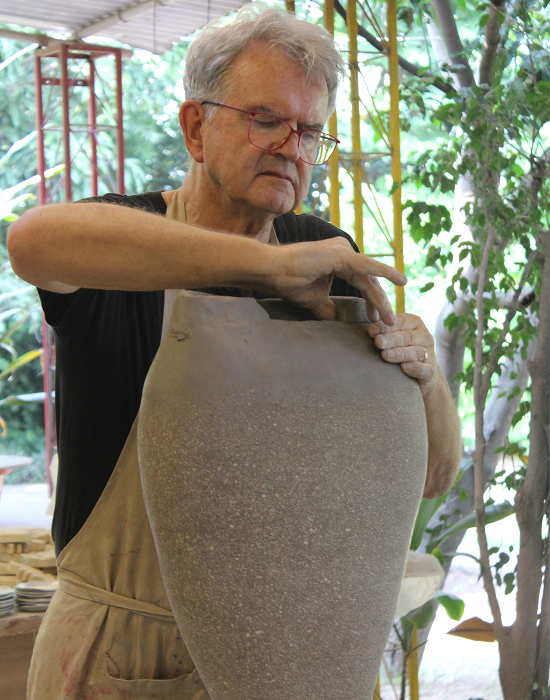
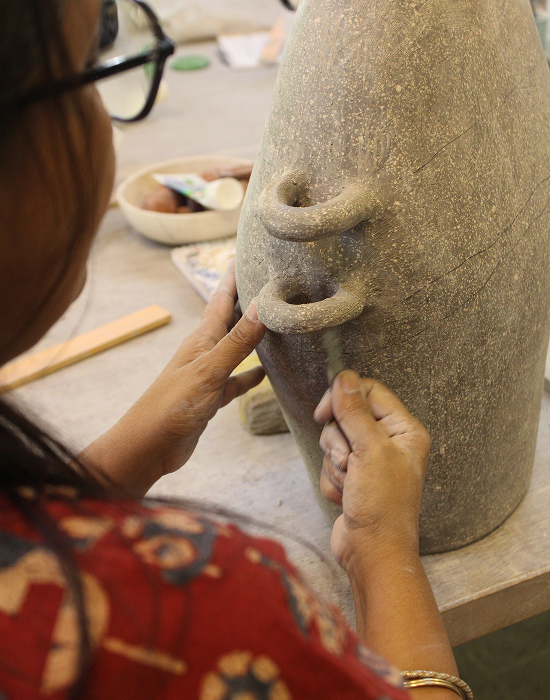
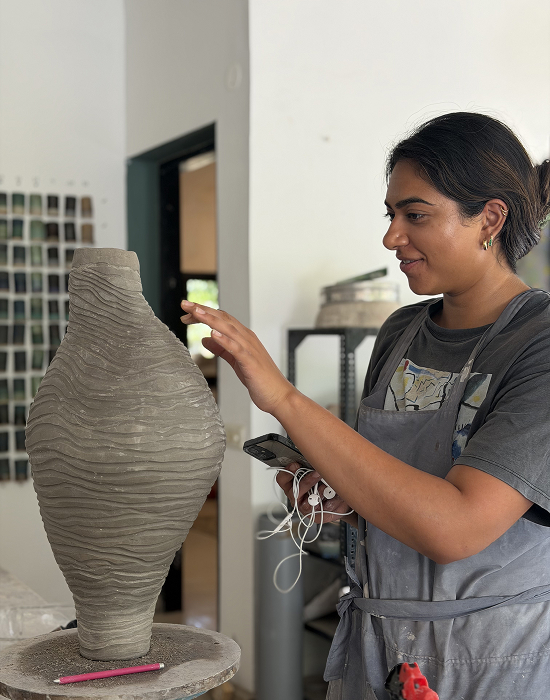
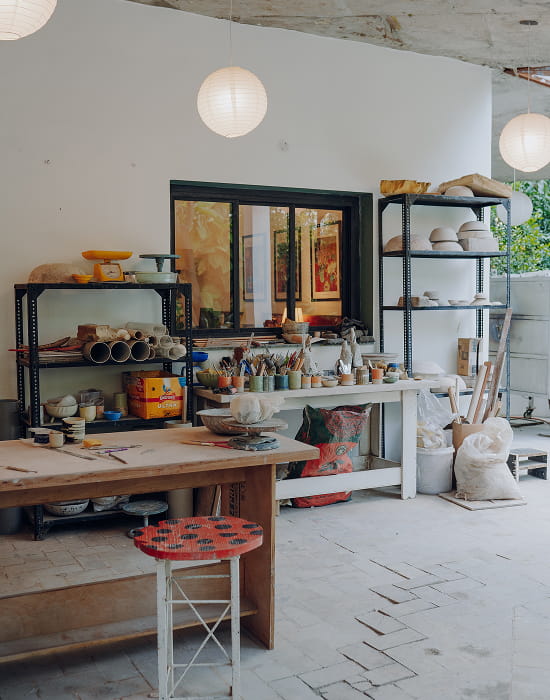
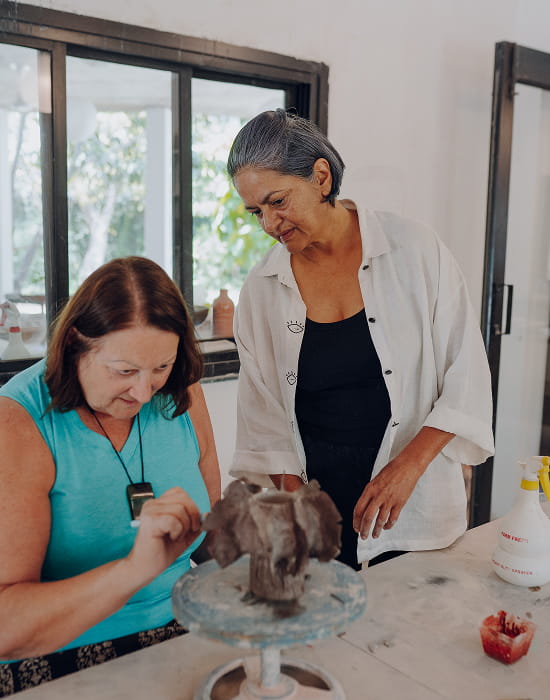
Structured time to build, explore, and experiment, with Andy close by.
2:00 PM
Lunch, then rest
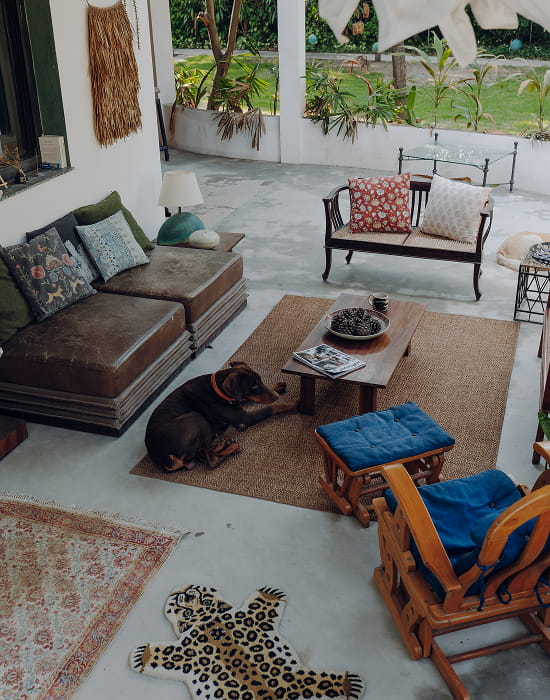
A real break — eat, read, nap, swim or just sit outside for a while.
2:30 PM
Open studio
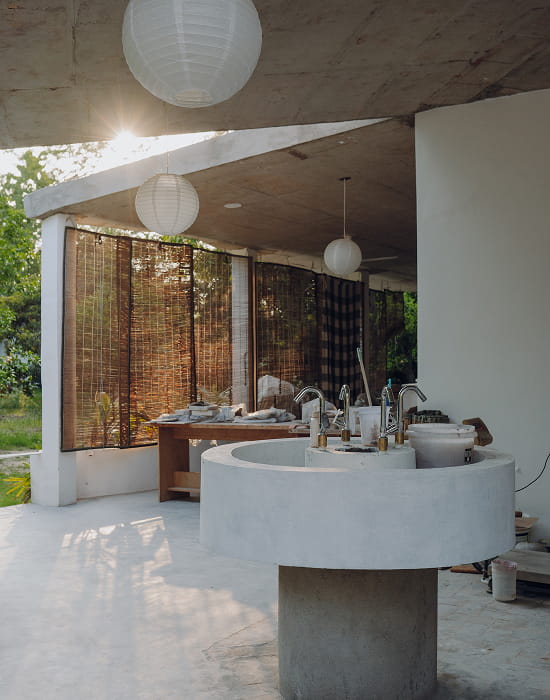
The wheel and the tables are yours — work, pause, or step away entirely.
4:30–6:30 PM
Reviews with Andy
One-on-one feedback on what you made that day. Setting the tone for tomorrow.
7:45 PM
Dinner and wind-down
The day closes the way it opened — together, at the table. Return to the studio if you like. Remember, its open 24/7.
Read Lara's full story
Anya deserves just as much recognition. Behind the scenes, she is the heart of the operation, making everything run seamlessly. Her dedication, patience, kindness, and constant support are felt in every corner of Aura. She is the kind of person who quietly inspires everyone around her through her work ethic and presence.
Simply being there feels like a privilege.
Whether you come to learn pottery, reconnect with yourself, find inspiration, or simply slow down for a while, Aura offers something rare and genuine. It is more than a retreat, it is a community, a sanctuary, and a place that stays with you long after you leave.
Thank you, Andy & Anya, and the entire Aura family for an unforgettable chapter of my life. I will carry a piece of Aura with me wherever i go 
PS: i now consider myself a proud aunt of four. Fifi, Bosh, Bono and Mylo. These doggos are one of the many things that makes this place so special.
Lara Abi Torbey
3-month course, 2026